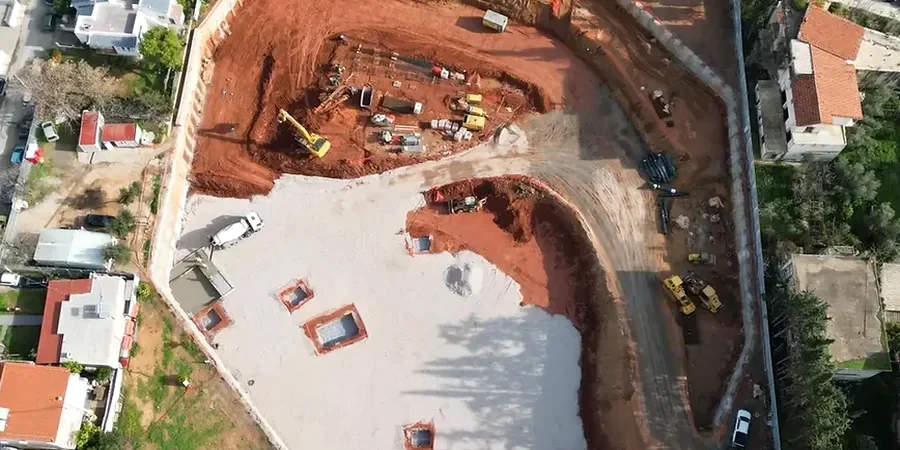
One of the most common—and costly—mistakes on Waterloo sites is treating a deep excavation like a simple cut in dry ground. The reality is different. Waterloo sits on a complex stratigraphy of Port Stanley Till, with interbedded sand and silt lenses that channel groundwater unpredictably. Ignoring these lenses during the shoring design phase triggers sudden instability, base heave, or flooding that stops the project cold. Our geotechnical design of deep excavations tackles this head-on. We analyze the lateral earth pressures on soldier pile and lagging walls, assess the dewatering demands, and specify a support sequence that matches the actual soil profile. Whether the cut is for a multi-level underground parking structure near King Street or a utility shaft in a residential zone, the analysis starts with site-specific data—not generic assumptions. We often pair the design with CPT testing to pinpoint those critical sand seams before the first bucket of soil moves.
Base stability in Waterloo's till is often controlled by the pore pressure in a thin silt seam—miss that seam, and the excavation floor fails without warning.
Service characteristics in Waterloo Ontario
Risks and considerations in Waterloo Ontario
The Ontario Building Code requires that excavations deeper than 3.6 meters be designed by a professional engineer. In Waterloo, the local geology makes this requirement especially critical. The Port Stanley Till contains isolated sand pockets that behave like aquifers under pressure. A shoring design that does not account for these perched water tables can experience a blow-out at the base, leading to rapid soil loss and catastrophic wall collapse. High silt content also means the till is frost-susceptible and degrades quickly when exposed to spring meltwater. Our geotechnical design of deep excavations includes a detailed hydrogeologic assessment and a staged construction sequence that respects the low tensile strength of the cohesive till. We require clear proof of soil parameters before issuing stamped drawings—because a shoring failure in a dense urban block impacts not just the site, but the public right-of-way and neighboring foundations.
Our services
The scope of a deep excavation design package depends on the cut geometry, soil profile, and proximity to sensitive structures. We deliver the following core deliverables for Waterloo projects.
Shoring Wall and Support System Design
Complete structural design of temporary or permanent shoring walls including soldier piles, secant pile walls, and internal bracing. We provide stamped drawings showing excavation stages, strut preload values, and dewatering specifications. The design verifies cantilever and anchored wall behavior under both short-term and long-term drained conditions.
Dewatering and Groundwater Control Plan
Assessment of aquifer response to excavation using pumping test data and analytical modeling. We design deep well or ejector systems to lower the phreatic surface below the excavation base, including a monitoring well layout to confirm drawdown during construction. The plan addresses discharge filtration requirements for City of Waterloo sewer system compliance.
Frequently asked questions
What is the typical cost for deep excavation design in Waterloo?
The engineering fee for a deep excavation design in Waterloo typically ranges from CA$3,170 to CA$10,440, depending on the complexity of the cut, the number of shoring stages, and the level of groundwater analysis required. A simple single-level basement on a suburban lot falls at the lower end, while a multi-level urban excavation adjacent to heritage buildings requires more extensive modeling and monitoring specifications.
How long does it take to receive stamped shoring drawings for a Waterloo site?
Once we have the complete geotechnical investigation report with the required soil parameters, we typically deliver concept-level shoring recommendations within two weeks and final stamped drawings within four weeks. Complex projects requiring iterative finite element analysis or coordination with a permanent structural engineer may extend the timeline.
Do you handle the permit submission to the City of Waterloo for deep excavations?
We prepare the engineering documentation package that supports the building permit application, including the shoring design drawings sealed by a Professional Engineer of Ontario. The general contractor or owner's representative typically submits the package to the City of Waterloo building division, but we address technical review comments directly and revise the design as needed to satisfy the city's engineering department.