Waterloo sits at roughly 330 meters above sea level, on a landscape shaped by the last glacial retreat. The ground underneath is a mix of dense Port Stanley Till and loose sandy outwash, especially near the Grand River corridor. When we run a site investigation for a new industrial slab in the Northdale area or a stormwater tank on Columbia Street, we commonly find granular layers that need densification. That is where our vibrocompaction design comes in. We do not guess at the energy required. We calculate it. The 2015 NBCC structural requirements and CSA A23.3 concrete standards frame our work, but the real numbers come from pre-treatment CPT testing and post-treatment verification. In Waterloo, depth to competent till varies dramatically, so every vibro design has to be site-specific.
Densification in glacial outwash is predictable if you measure it right. In Waterloo, we design to an SPT N-value of 25 or better post-treatment.
Service characteristics in Waterloo Ontario
Risks and considerations in Waterloo Ontario
In Waterloo, plenty of old fill exists where farmsteads were leveled for subdivisions twenty years ago. We have seen projects where uncontrolled fill with brick fragments and organic debris was overlooked, and the vibroflot simply could not penetrate or densify it uniformly. That risk is real. Another local issue is groundwater: the Waterloo Moraine aquifer system keeps the water table high in many parts of the city, and vibrocompaction in saturated fine sands can trigger temporary liquefaction that complicates the treatment. A detailed hydrogeological check before mobilization is not optional. Finally, proximity to existing structures matters. On narrow sites along King Street or near university buildings, vibration monitoring with seismographs is mandatory to stay within peak particle velocity limits and avoid damage claims.
Our services
Our vibrocompaction design work in Waterloo covers the full lifecycle of a densification program, from feasibility to sign-off. We deliver three core services.
Pre-Treatment Site Characterization
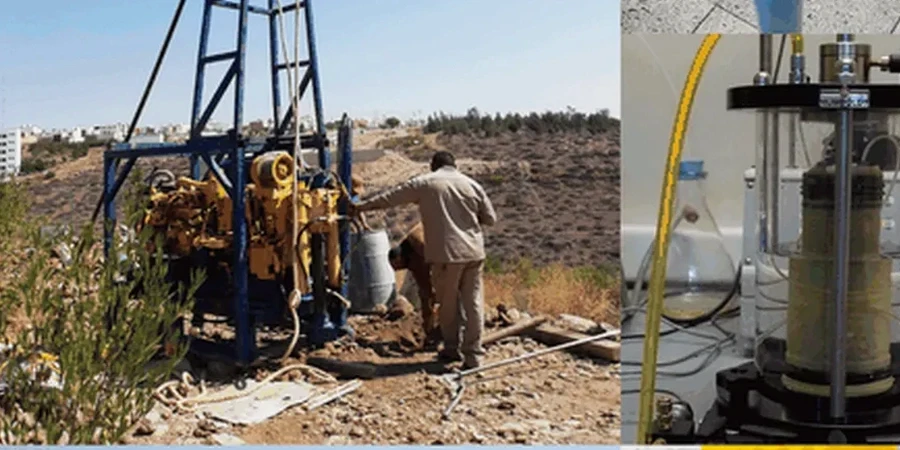
We run CPT soundings and sample boreholes on a grid to map the loose zones precisely. The data feeds directly into the vibrocompaction design model.
Design Package and Specification
We produce stamped drawings showing probe layout, sequencing, target amperage, and lift thickness. Specifications reference CSA and NBCC requirements for shallow foundations on improved ground.
Post-Treatment Verification Testing
After densification, we return with the CPT rig to confirm the target relative density has been met across the entire treatment area. We issue a compliance report for the building permit file.
Frequently asked questions
How much does a vibrocompaction design cost for a site in Waterloo?
For a typical commercial or light industrial lot in Waterloo, the design package ranges from CA$2,270 to CA$7,280 depending on the area size, number of CPT soundings required, and reporting complexity. A small residential lot would be at the lower end. Larger multi-acre sites with variable geology push toward the upper end because of the extra subsurface data needed.
How deep can vibrocompaction treat the loose sand layers common in Waterloo?
With the equipment we specify, treatment depths of 4 to 14 meters are standard in the Region of Waterloo. The Port Stanley Till often acts as a natural refusal boundary, so we design the depth to terminate in that competent stratum. Deeper treatment is possible with larger vibroflots, but it’s rarely necessary for the building loads we see here.
What is the minimum grain size for effective vibrocompaction?
Vibrocompaction works best in sands and gravels with less than 15 percent fines passing the 75-micron sieve. If the Waterloo site has a higher silt content, the vibration energy dissipates quickly, and we either switch to stone columns or adjust the design to a vibro-replacement approach. We always run a grain size analysis before committing to a pure densification program.
How long does the design and approval process take?
From the first CPT push to the final stamped design package, the process typically takes two to three weeks in Waterloo. The fieldwork takes one or two days. The engineering analysis, drafting, and quality review fill the rest. If the City of Waterloo requires a peer review for a complex site, we budget an extra week for that exchange.