Waterloo’s transformation from a quiet farming settlement into a booming tech hub has pushed construction into increasingly challenging ground conditions. The region’s complex glacial stratigraphy—layers of silty clay till interspersed with sand and gravel lenses—creates a subsurface mosaic where excavation stability cannot be left to chance. When crews open cuts near the ION LRT corridor or adjacent to century-old masonry in UpTown, the behavior of the ground must be tracked continuously, not just assumed from a pre-construction report. Geotechnical excavation monitoring provides that real-time feedback loop, capturing wall movement, pore pressure shifts, and vibration data that allow engineers to verify design assumptions before small deviations become safety threats. In a city where rapid intensification meets water-bearing overburden, this instrumentation-driven approach keeps both the excavation and the surrounding urban fabric secure.
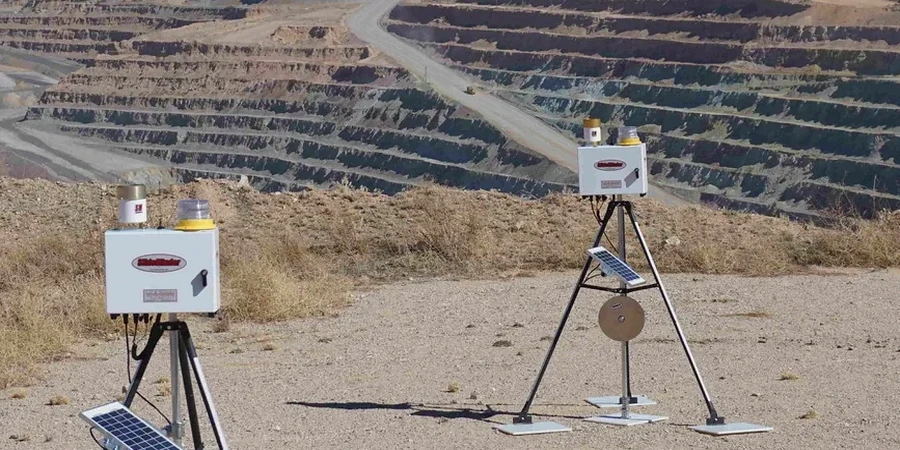
Automated inclinometers in Waterloo’s till can detect wall deflection before it becomes visible at the surface—often the difference between a straightforward adjustment and a costly remedial action.
Service characteristics in Waterloo Ontario
Risks and considerations in Waterloo Ontario
The Waterloo Moraine contains confined sand and gravel aquifers that lie directly beneath the low-permeability till cap—a stratigraphic sequence that has caused heave and basal instability in more than one deep excavation across the Region of Waterloo. When a cut penetrates close to the till-aquifer interface, the upward hydraulic gradient can exceed the weight of the remaining soil plug, leading to a sudden base failure that fills the excavation with water and sediment in minutes. Instrumenting the base with standpipe or VW piezometers at multiple depths provides early warning of rising pore pressures before they reach critical values. The 2010 Kidd Creek-style instability documented in regional geotechnical bulletins underscores why monitoring must extend well below the excavation floor, not just focus on shoring walls. Without this deeper instrumentation, the first sign of trouble is often the failure itself.
Our services
Monitoring programs in Waterloo’s urban core must adapt to tight site constraints while delivering unambiguous data for quick decision-making. We configure each program around the specific shoring type, adjacent structures, and groundwater conditions.
Automated Shoring Performance Monitoring
Digital inclinometers, tiltmeters, and load cells on tieback anchors and struts transmit readings to a cloud dashboard accessible by the entire project team. We calibrate alert thresholds based on the geotechnical design report and NBCC 2020 guidance, ensuring alarms trigger before serviceability limits are reached.
Vibration and Settlement Control Plans
Triaxial geophones and precise leveling arrays track ground-borne vibration during rock chipping or piling, with PPV limits set according to CSA guidelines and neighboring building sensitivity. Settlement pins and crack monitors on adjacent heritage structures provide a direct record of cumulative movement throughout the excavation sequence.
Frequently asked questions
What is the typical cost range for excavation monitoring in Waterloo?
Programs generally range from CA$1,310 to CA$3,310 per month depending on the number of instruments, reporting frequency, and whether automated data acquisition is required. A monitoring plan for a single-family infill lot with manual readings will sit at the lower end, while a multi-level shoring system with cloud-connected inclinometers, multiple piezometer strings, and daily engineering review moves toward the upper range.
How is construction vibration regulated in Waterloo Region?
While Ontario does not have a single standalone vibration standard for all construction, the City of Kitchener and Region of Waterloo typically reference CSA S250:14 for utility protection and Transport Canada or CN guidelines when work occurs near rail corridors. We establish project-specific peak particle velocity (PPV) limits—commonly 5 to 12 mm/s for commercial buildings—and monitor with triaxial geophones to ensure compliance during rock breaking or sheet pile driving.
What instruments are essential for a deep excavation in Waterloo till?
At minimum, an in-wall or in-soil inclinometer to track lateral deflection, vibrating wire piezometers to monitor pore pressure at the till-aquifer interface, and a surface settlement array to record any vertical movement behind the shoring. For cuts deeper than 6 meters or those adjacent to sensitive structures, we add tiltmeters on neighboring buildings, load cells on tiebacks, and vibration monitors linked to an automated alarm system. More info.