The Benkelman beam still sees regular use on Waterloo test sections, its long aluminum arm pivoting on a probe that measures surface deflection under a loaded truck axle. This field instrument, paired with lightweight deflectometers, captures the elastic response of the pavement system which directly feeds into the mechanistic-empirical design approach required for local conditions. Waterloo sits atop the Waterloo Moraine, a complex deposit of interbedded silt, clay, and sand that varies dramatically over short distances. A pavement cross-section that performs well near the University of Waterloo may fail prematurely in the lower-lying areas near the Grand River floodplain where the water table sits within 1.5 meters of the surface. Our team integrates falling weight deflectometer readings with laboratory resilient modulus testing on triaxial specimens to calibrate the structural number and ensure the asphalt, granular base, and subgrade work as a unified system under Ontario's extreme freeze-thaw cycles.
Waterloo's silty till subgrades can lose over 60% of their bearing capacity during spring thaw — designing without seasonal modulus adjustment guarantees premature fatigue cracking.
Service characteristics in Waterloo Ontario
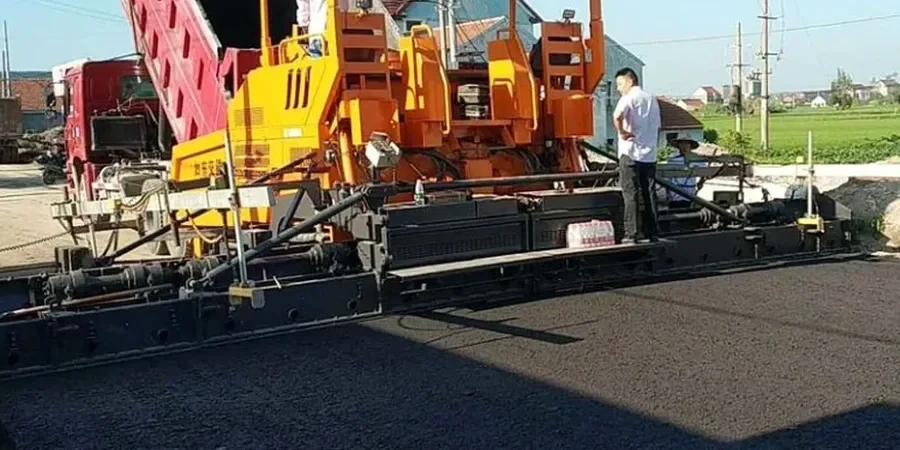
Risks and considerations in Waterloo Ontario
The Waterloo Moraine contains discontinuous lenses of silt and clay that are highly frost-susceptible, classified as F3 or F4 material under Ontario's OPSS standards. When these silts lie within the first 1.2 meters below the pavement, the combination of negative temperatures and available groundwater can generate ice lenses up to 12 mm thick, heaving the asphalt unevenly and creating the longitudinal cracks that pepper older roads in the Beechwood neighborhood. A flexible pavement without adequate granular separation will also suffer from subgrade fines pumping upward into the base course during the spring thaw, a phenomenon documented by Casagrande's classic work on frost action in soils. Our design explicitly calculates the segregation potential of the subgrade, referencing the MTO's frost action research to specify a non-frost-susceptible granular layer thick enough to interrupt capillary continuity and prevent the moisture migration that fuels ice lens growth.
Our services
Ofrecemos un portafolio completo de servicios técnicos de diseño de pavimento flexible diseñados para proyectos de construcción, minería e infraestructura en Waterloo Ontario.
Mechanistic-Empirical Pavement Analysis
We develop pavement structural designs using layered elastic theory, correlating FWD deflection basins with laboratory-determined resilient modulus values. This approach accounts for Waterloo's silty till subgrades which lose significant bearing capacity during spring thaw, and includes seasonal modulus adjustments per the AASHTOWare Pavement ME Design framework adapted for Ontario's climate data.
Seasonal Monitoring and Frost Protection
Waterloo averages 115 frost days annually, requiring careful specification of granular base thickness to prevent capillary rise and ice lens formation in the subgrade. We install thermistor strings and moisture sensors in test sections to validate the frost protection layer, documenting temperature gradients and water content changes that inform the final pavement design and prevent differential heave.
Frequently asked questions
What traffic data is needed for a flexible pavement design in Waterloo?
The design requires the average annual daily traffic (AADT), the percentage of commercial vehicles, and the directional distribution for the specific road segment. For Waterloo Regional roads, we typically obtain this from the Region of Waterloo's traffic count database; for private developments like commercial parking lots, we conduct vehicle classification counts during peak and off-peak periods. The traffic spectrum is converted to equivalent single axle loads (ESALs) over the design period, usually 20 years for arterial roads and 10-15 years for local streets, following the AASHTO 1993 procedure with Ontario-specific truck factors.
How does the Waterloo Moraine geology affect pavement design compared to other Ontario regions?
Unlike the uniform clay plains of the Greater Toronto Area, the Waterloo Moraine is a glaciofluvial deposit with abrupt transitions between granular outwash and silty till. This heterogeneity means we cannot rely on a single design section for an entire subdivision — we typically perform subgrade characterization at 50 to 100 meter intervals along the proposed alignment. The silty till matrix has a plasticity index between 5 and 15, which makes it moderately frost-susceptible, requiring a thicker granular base than what is used on the coarse-grained sands found in parts of Cambridge to the south. The perched water tables common in the moraine also demand careful drainage consideration to prevent base saturation.
What is the typical cost range for a flexible pavement design package in Waterloo?
A complete flexible pavement design for a typical Waterloo project, including FWD testing, subgrade soil sampling, laboratory resilient modulus testing on both subgrade and granular materials, mechanistic analysis, and a signed design report, ranges from CA$1,980 to CA$6,770. The final cost depends on the project length, the number of test sections required, and whether seasonal monitoring with thermistor strings is included. Projects under 500 meters with uniform subgrade conditions fall at the lower end, while arterial road designs with multiple pavement cross-sections and instrumentation reach the upper range.
Do you use the AASHTO empirical method or the mechanistic-empirical method?
We use both, selecting the approach based on project requirements. For standard residential subdivisions in Waterloo, the AASHTO 1993 empirical method provides a reliable structural number calculation when combined with our local experience on the moraine soils. For higher-traffic arterials or projects where the Region of Waterloo requires it, we apply the mechanistic-empirical approach using layered elastic analysis software, which explicitly models the stress and strain distribution through each pavement layer and predicts fatigue and rutting performance using calibrated transfer functions. This method is particularly valuable when evaluating alternative materials or designing for bus rapid transit corridors.
How do you account for freeze-thaw cycles in the pavement design?
We divide the year into design seasons following the MTO's seasonal modulus adjustment procedure, assigning reduced subgrade modulus values for the spring thaw period (typically March through April in Waterloo) when the subgrade is at its weakest. The frost penetration depth is calculated using the modified Berggren equation with Waterloo's freezing index, which averages approximately 450 degree-days below 0°C. The design ensures that the combined thickness of asphalt and granular base exceeds 50% of the maximum frost penetration depth, and we specify non-frost-susceptible material for the full frost penetration zone where the subgrade is classified as F3 or F4. More info.