Designing a mat foundation in Waterloo means navigating a tale of two soil profiles. The western edge near the Waterloo Moraine offers dense, silty sand till that can support significant bearing pressures, while neighborhoods closer to the Grand River flats or along Laurel Creek often hide pockets of compressible, glaciolacustrine clay. A uniform slab that works perfectly in Beechwood may require complete re-engineering just a few kilometers east in uptown Waterloo. The region's variable overburden, shaped by the retreat of the Laurentide Ice Sheet, demands a foundation solution that bridges these abrupt transitions without excessive differential settlement. Our laboratory team runs the full suite of consolidation and strength tests needed to model subgrade reaction, integrating site-specific stratigraphy into the structural design. We often combine this analysis with a plate load test on marginal soils to validate modulus assumptions before finalizing reinforcement layouts.
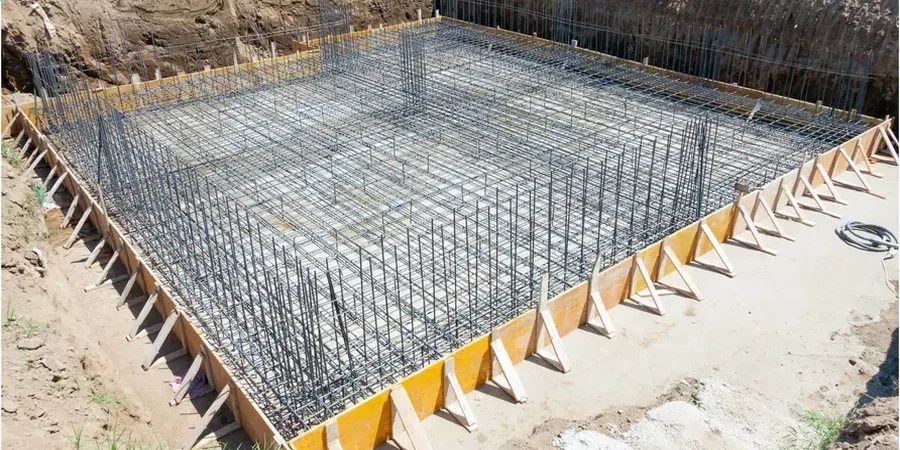
A mat foundation in Waterloo doesn't just spread load; it bridges the erratic transition from dense moraine till to soft glaciolacustrine clay in a single structural element.
Service characteristics in Waterloo Ontario
Risks and considerations in Waterloo Ontario
The sharp contrast between Waterloo's humid continental summers and the deep frost penetration from December through March creates a unique risk for mat foundations on fine-grained soils. Saturated clay pockets that perform adequately under summer loading can heave significantly during winter if the water table, often within two meters of grade near the Grand River watershed, feeds ice lens formation. A slab designed without accounting for this seasonal volume change risks perimeter cracking and utility entry point shear. The Ontario Building Code supplement for frost protection requires careful placement of rigid insulation and sub-slab drainage layers; our team specifies the granular capillary break based on grain size analysis of the imported fill, ensuring it remains free-draining even after compaction. Differential heave across a large footprint remains the primary long-term concern we address through both geotechnical and structural detailing.
Our services
Our Waterloo geotechnical program for mat foundations covers the full scope from field investigation to final modulus recommendations.
Subgrade reaction modulus profiling
We generate k_s profiles for spring-based finite element modeling, incorporating consolidation data and plate load verification in Waterloo's variable till deposits.
Settlement analysis under structural loads
Immediate and consolidation settlement predictions for large-footprint slabs, using oedometer tests on undisturbed samples from each distinct soil unit encountered.
Frost protection design review
Specification of insulation placement, sub-slab granular layers, and drainage to meet Ontario Building Code frost protection requirements for heated and unheated slabs.
Construction-phase subgrade inspection
Proof rolling observation, density testing, and confirmation that exposed subgrade conditions match the design assumptions before rebar placement.
Frequently asked questions
What is the typical cost range for a mat foundation geotechnical investigation in Waterloo?
For a residential or light commercial mat foundation in Waterloo, the geotechnical investigation and design parameter report typically falls between CA$1,510 and CA$5,210, depending on the number of boreholes and the laboratory testing program required to characterize the site-specific glacial soils.
When is a mat foundation preferable to strip footings in Waterloo?
A mat foundation becomes preferable when bearing pressures exceed the allowable capacity of Waterloo's softer clay pockets, or when differential settlement between closely spaced footings would exceed 1/500 of the span. It also provides a practical solution where the water table is high and individual footing excavations would require continuous dewatering.
How does Waterloo's glacial geology affect mat foundation design?
The Port Stanley Till and interbedded glaciolacustrine units create abrupt lateral changes in stiffness. Our investigation targets these transitions so the structural engineer can place construction joints where subgrade modulus values shift, reducing the risk of cracking from differential movement.
What laboratory tests are essential for a mat foundation design?
Consolidation tests provide the compressibility parameters for settlement prediction, unconfined compression and triaxial tests define strength, and grain size distribution confirms the frost susceptibility of the subgrade. Atterberg limits help us assess the plastic behavior of the clay seams common in Waterloo.
How do you address frost heave beneath a mat foundation in Waterloo?
We follow the Ontario Building Code's frost protection guidelines, specifying a minimum depth of cover and rigid insulation to retain ground heat. The sub-slab granular layer is designed as a capillary break, verified through grain size analysis, and perimeter drainage is directed to a sump or gravity outlet to keep the formation dry.